Awkward Reindeer Mouse Pad: A Practical Tool for Desk Comfort and Creative Workflow
Your desk is more than a surface. It is the physical anchor for your digital work, and every element on it influences how you move through tasks. A mouse pad might seem like a minor accessory, but the right one affects cursor precision, wrist fatigue, and even the tone of your workspace. The Awkward Reindeer Mouse Pad, available in a sublimation-ready format, combines purposeful design with the flexibility to embed custom visuals. This article examines how this mouse pad fits into real workflows, how it interacts with other tools and decisions, and how you can integrate it into your own routine for better comfort and consistency.
Understanding the Awkward Reindeer Mouse Pad in Context
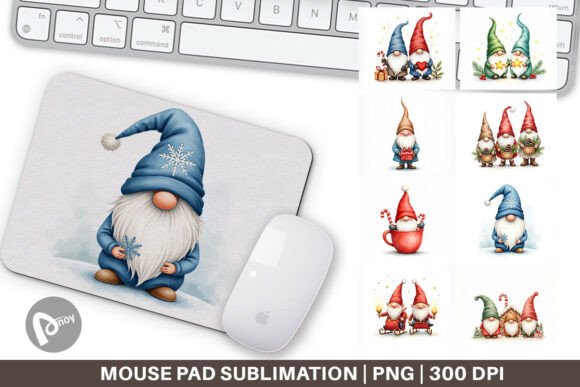
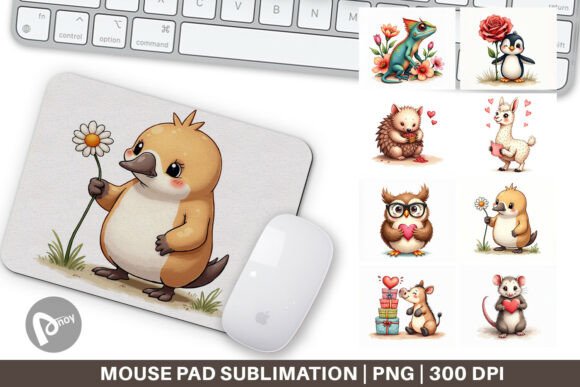
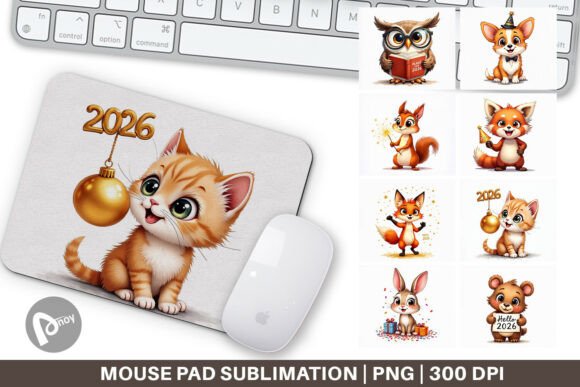
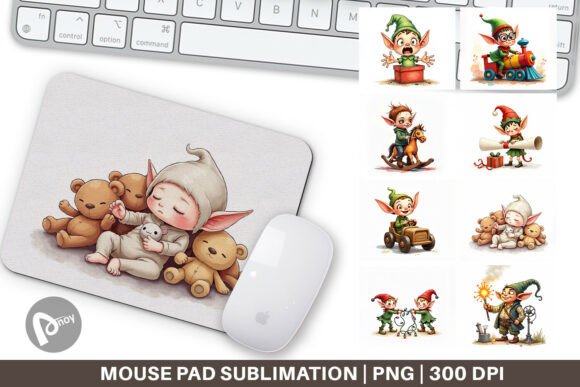
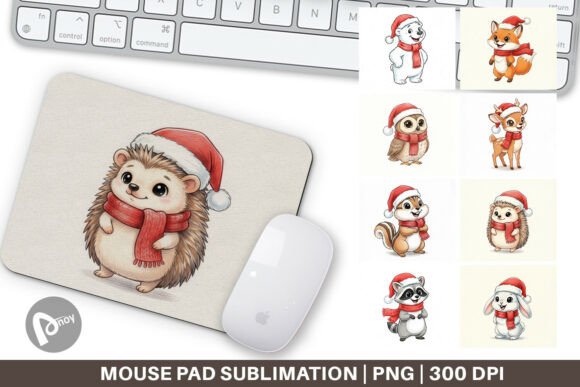
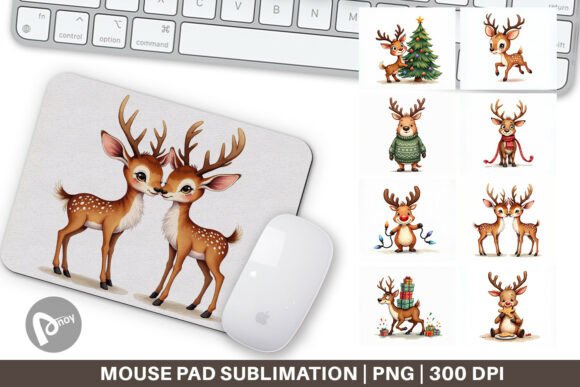
The Awkward Reindeer Mouse Pad is a sublimation-ready fabric pad sized at 9.5 by 8.1 inches at 300 dpi, delivered as a set of eight PNG files. It is not merely a decorative item. It is a substrate for personal or branded imagery, placed directly under your mouse. The "awkward reindeer" design itself can be playful or seasonal, but the real value lies in what the format enables: you can replace the visual with your own artwork, logo, or pattern before printing. This makes it a component in a broader creative or branding process rather than a standalone purchase.
To use it effectively, you need a sublimation printer, transfer paper, heat press, and a clean workspace. The mouse pad becomes the final output of a short production chain: design, print, transfer, press, cool, and place. Understanding this chain helps you decide when and how to use the mouse pad in a project, whether for client gifts, event merchandise, or personal workspace upgrades.
Where the Mouse Pad Fits in a Workflow
The mouse pad is most valuable at specific points in a workflow: during the preparation phase of a branding or gifting initiative, after a design has been finalized but before it is applied to multiple surfaces, or as a standalone prototype to test a visual concept before committing to larger runs.
Before a Project: Preparation and Design Validation
If you are planning a desk accessory line, a promotional giveaway, or a themed workspace refresh, the Awkward Reindeer Mouse Pad serves as an early test piece. Use it to validate color accuracy, print resolution, and image alignment before producing other sublimated items like coasters, tumblers, or puzzle mats. Because the mouse pad is relatively small and inexpensive, it is an ideal surface for proofing. You can print a single design, inspect the transfer quality, and adjust your settings before scaling up.
In this phase, the mouse pad interacts with your design files, color profiles, and printer calibration. Ensure your PNG files are flattened, sized exactly to 9.5 x 8.1 inches, and set to 300 dpi. Any deviation may cause misalignment or blurring. Check your heat press temperature and pressure against the pad's thickness. Sublimation blanks vary, so a brief test with the Awkward Reindeer Mouse Pad helps you dial in the correct time and heat for your specific equipment.
During a Project: Real-Time Production and Customization
When you are actively producing mouse pads for a specific use case—say, a batch for a team onboarding kit or a limited run for a trade show—the mouse pad becomes a repeatable output. Your workflow at this stage is systematic: export the final design from your editing software, open the PNG file in your sublimation print queue, load the paper, and press each pad in sequence.
- Print queue management: Group your design files by order or client. Label each PNG clearly to avoid mix-ups.
- Transfer consistency: Use the same pressure and duration for every pad. A logbook or timer ensures repeatability.
- Quality check: After pressing, inspect the image for ghosting, uneven color, or fabric scorching. Catch issues early to avoid waste.
- Batch organization: Stack finished pads face up in a dry area. Avoid stacking heavy items on top before the ink fully cures.
During production, the mouse pad interacts with your heat press, silicone pad, protective paper, and lint roller. A clean surface prevents dust particles from embedding under the transfer. If you are producing multiple designs, keep a reference sheet with time and temperature settings for each color density.
After a Project: Distribution, Use, and Feedback
Once the mouse pads are finished, they enter the user's environment. At this point, the pad is no longer a production item but a functional tool. The recipient places it on their desk, under their mouse. Here, the design becomes a subtle brand touchpoint or a personal expression. Track how recipients respond. Do they comment on the size, texture, or grip? Do they ask about customization? This feedback loops back into your design and production decisions for future batches.
For personal use, the Awkward Reindeer Mouse Pad becomes part of your daily computer interaction. The dimensions—9.5 by 8.1 inches—provide enough room for a standard mouse without overwhelming the desk. The smooth fabric surface supports optical and laser sensors. The sublimated image does not peel or fade under normal use because the ink bonds with the polyester coating at a molecular level. This durability means the pad remains functional and visually consistent months after installation.
Practical Implementation Tips
Integrating this mouse pad into your routine requires attention to a few factors: preparation, compatibility, usability, and long-term care.
Preparation: Setting Up for Sublimation
Before you print, confirm that your design file matches the provided PNG dimensions exactly. Open the file in your image editor and verify the canvas size is 9.5 x 8.1 inches at 300 dpi. If you are layering text or graphics, keep all elements within the safe area. Sublimation blanks often have a slight border that may not accept ink evenly, so leave a few millimeters of margin inside the edge.
Use a sublimation printer with dedicated ink and paper. Standard inkjet inks will not transfer. Set your print mode to "mirror" if your design includes text, because the transfer reverses the image during pressing. Preheat your heat press to the temperature recommended by your blank supplier, typically around 380–400°F. Cover the pad with a protective sheet to prevent direct contact between the heating element and the fabric.
Compatibility with Other Desk Tools
The mouse pad works alongside your mouse, keyboard, monitor, and wrist rest. Its low profile means it does not raise the mouse height significantly. The fabric surface is compatible with both standard and ergonomic mice. If you use a trackball or stylus, test the surface glide before committing to a full batch. Some users prefer a harder surface for precise cursor movement; others favor the slight drag of fabric. The Awkward Reindeer Mouse Pad sits toward the glide end of the spectrum, offering controlled movement without excessive friction.
For dual-monitor setups or large desks, you may combine this pad with a larger desk mat. Place the mouse pad on top of the mat if you need extra wrist cushioning, or use it alone on a bare surface. The pad's rubber base prevents slipping on wood, glass, or laminate desks.
Usability During Daily Work
During a typical workday, your mouse pad is in constant use: navigating spreadsheets, switching browser tabs, editing images, or controlling creative software. The Awkward Reindeer Mouse Pad supports these actions without distraction. The sublimated image is bonded into the fabric, so there is no surface texture change between the printed and unprinted areas. This uniformity means your mouse sensor reads the surface consistently across the entire pad.
If you use the pad for extended hours, consider the visual impact. Bright or busy designs can become fatiguing over time. The awkward reindeer motif is intentionally playful, which can boost mood during routine tasks. If you prefer a calmer environment, choose a design with muted colors or low contrast. The sublimation process allows full tonal range, so you are not limited to flat vector graphics.
Organization and Efficiency
In a production workflow, organize your mouse pad blanks by order or design. Keep the PNG files in a dedicated folder with clear naming conventions. Example: "ClientName_ReindeerPad_v1.1.png". This reduces confusion when switching between projects. Use a spreadsheet to track how many pads you have pressed, at what temperature, and for how long. Over time, this data helps you optimize your process for speed and quality.
If you are a solo creator, batch your sublimation work on a single day each week. Consolidating prep, printing, and pressing reduces setup and cleanup time. The eight PNG files included in the Awkward Reindeer Mouse Pad package can be used as a single design spread across multiple pads or as eight distinct variations. Decide before printing to avoid redundant work.
Quality Control and Long-Term Use
Inspect each pad after pressing. Look for:
- Color bleeding or blurring at edges
- Uneven pressure marks
- Scorch marks from overheating
- Gaps in ink coverage
If you see any issues, adjust your press settings before continuing. For long-term use, clean the pad with a damp cloth and mild soap. Avoid soaking it or using abrasive cleaners. The sublimated image will not wash out because the ink is embedded in the polyester fibers. The rubber base remains grippy unless exposed to extreme heat or direct sunlight for prolonged periods.
Store unused blanks in a cool, dry place away from heat sources. Sublimation blanks are sensitive to moisture, which can cause uneven ink absorption during pressing. Keep them flat to prevent curling edges.
Integrating the Mouse Pad into a Broader Routine
The Awkward Reindeer Mouse Pad is not a tool that demands constant attention. It is a background element that supports your primary work. To integrate it smoothly, treat it as part of your desk setup rather than an isolated accessory. When you redesign your workspace, evaluate your mouse pad alongside your monitor height, chair position, and keyboard angle. A cohesive desk layout reduces physical strain and mental clutter.
For entrepreneurs and small business owners, the mouse pad can serve as a low-cost branded giveaway. Include it in welcome kits, client appreciation packages, or event swag bags. Because it is sublimated, the colors remain vibrant through handling. Recipients will use it daily, keeping your brand visible in their workspace. This long-term exposure is more valuable than a flyer or sticker that gets discarded quickly.
For educators and bloggers, the mouse pad can display course logos, blog headers, or motivational graphics. It reinforces your visual identity every time you record a screen tutorial or host a webinar. The camera may capture the pad in the frame, so a clean, readable design adds professionalism to your video background.
For freelancers and creators, the mouse pad is a canvas for personal expression. Change the design seasonally, for holidays, or when you rebrand. Because you control the sublimation file, you can create a series of pads that evolve with your style. Keep a template of the 9.5 x 8.1 inch PNG so you can produce a new pad in under an hour whenever inspiration strikes.
Useful Observations for Long-Term Use
Over months of daily use, the mouse pad's surface may develop slight wear in the area where the mouse rests most often. This is normal and does not affect the image significantly because the ink is bonded, not printed on top. If you notice reduced glide, wipe the pad with a microfiber cloth. The rubber base may collect dust over time. Flip the pad occasionally and clean the underside to maintain grip.
If you produce multiple pads with the same design, compare them side by side after pressing. Slight variations in color can occur due to minor temperature differences across the heat press platen. Rotate the pad during pressing to distribute heat evenly. This practice is especially important when using a clamshell press with a lower heating element.
The Awkward Reindeer Mouse Pad is compatible with most standard mice, but if you use a gaming mouse with a high DPI and low lift-off distance, test the surface for tracking accuracy. Fabric pads generally perform well, but heavily textured designs may cause sensor skipping. Keep your mouse firmware updated and clean the sensor lens periodically.
For desk organization, the pad can double as a small coaster or phone rest in a pinch, though its primary function remains mouse navigation. If you share a desk or work in a hot desk environment, personalize your pad to mark your territory. A sublimated design with your name or initials makes the pad unmistakably yours.
Finally, consider the environmental aspect. Sublimation does not use water or produce significant waste like screen printing. The fabric pad is durable and reusable until the rubber base degrades. When you eventually replace it, the material can be repurposed as a cleaning cloth or craft material. This longevity reduces the frequency of purchases and the associated packaging waste.
The Awkward Reindeer Mouse Pad, when understood as part of a production process and daily desk routine, becomes more than a novelty. It is a reliable surface, a branding vehicle, and a creative outlet. By preparing carefully, producing consistently, and using it thoughtfully, you gain a tool that supports your work without demanding extra attention. That is the mark of a practical upgrade.