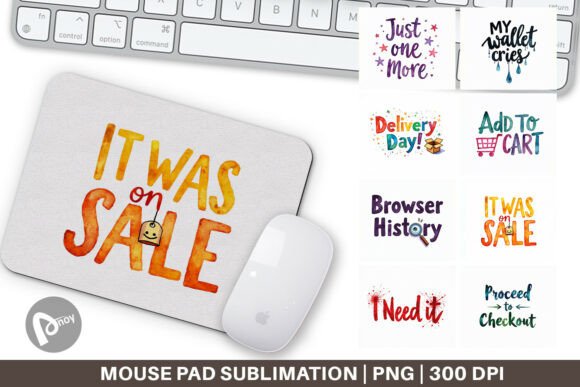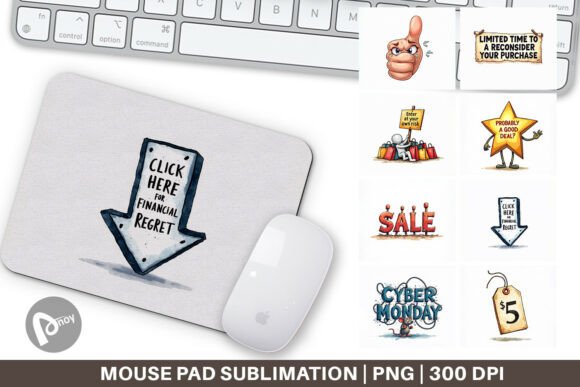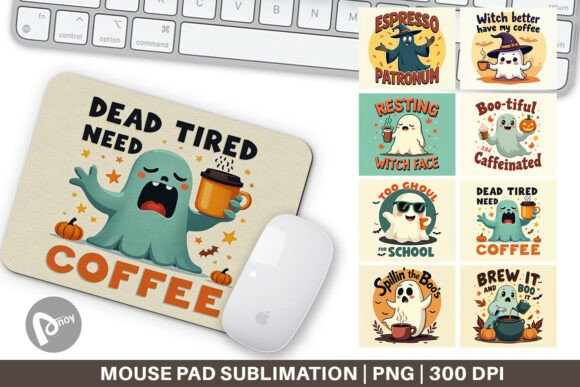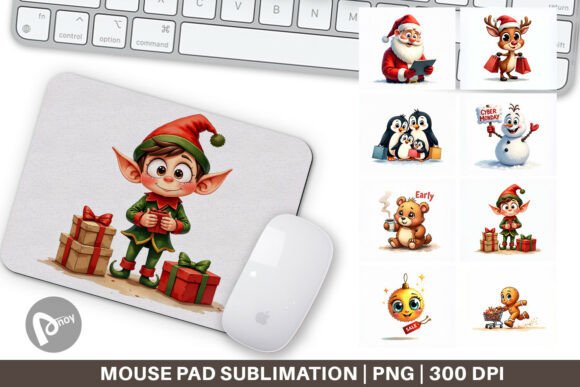
Maximize Your Desk Setup: Smart Choices During the Mouse Pad Big Cyber Monday Sale
The annual rush of online deals is here, and the offers on personalized desk accessories are hard to miss. You have likely seen the ads promising a "Mouse Pad Big Cyber Monday Sale" alongside a gorgeous "Sublimation Mouse Pad" design. The allure of upgrading your workspace with a creative, vibrant graphic while saving money is a powerful one. However, the difference between a purchase that boosts your productivity and one that becomes a regret often comes down to a few key details. This guide is here to help you navigate those details, ensuring the pad you buy is a genuine upgrade for your desk, your comfort, and your daily workflow.
The Material Trap: When a Great Design Meets a Poor Foundation
The most exciting part of any mouse pad sale is the design. You are offered attractive, creative visuals that promise to beautify your work desk or gaming room. It is easy to fall in love with the PNG file and assume the physical product will match that standard. A common mistake is to treat the design and the mouse pad as one inseparable, high-quality entity.
The reality is that a stunning digital file can be ruined by a cheap substrate. A low-quality sublimation mouse pad often has a rough, uneven surface that disrupts mouse sensor tracking. The polyester top layer might be thin, causing the colors to look dull or fade rapidly with normal use. The edges may fray, and the base could be a thin, synthetic rubber that slides across your desk and emits a strong chemical odor.
A better approach: Evaluate the mouse pad's construction with the same scrutiny you apply to the design. A high-quality sublimation pad requires a thick, high-polyester fabric top that accepts the dye permanently. It should have a non-slip natural rubber base that stays firmly in place. Stitched edges are a sign of durability, preventing the layers from separating over time. The design file is your promise, but the substrate material is what delivers on that promise. Do not let a beautiful image distract you from a poorly made foundation.
Size and Workflow: Why 9.5 x 8.1 Inches Demands a Second Look
The promotional material specifies "8 File Png 9,5 x 8,1 inches 300 dpi." This is a non-standard size, sitting between a compact wrist-rest pad and a full desk mat. An overlooked mistake is buying this size without considering your specific desk setup and workflow. Many users assume a mouse pad is a one-size-fits-all accessory, but this size is a specialized tool.
If you have a full-sized keyboard and need a large area for sweeping mouse movements in a game or design application, this size will only cover your mouse zone. It works brilliantly if you intend it for that purpose, providing a dedicated, high-quality surface for your mouse while keeping your keyboard on the desk itself. However, if you envisioned a unified surface for both keyboard and mouse, this pad will fall short.
Practical advice before buying: Physically measure the active zone on your desk where your mouse travels. An 8.1 by 9.5 inch pad is excellent for precise, controlled mouse work. It is a perfect companion for graphic designers, video editors, and gamers who want a smooth, dedicated gliding surface. If you prefer a larger, all-encompassing desk mat, look for an extended version. Understanding the intended use of this specific size will prevent the frustration of a pad that doesn't fit your habits.
The Sublimation Process: What the PNG File Actually Requires
A significant misunderstanding surrounding deals like this involves the printing process itself. You are receiving "PNG FILE 8 File Png 9,5 x 8,1 inches 300 dpi." This is a high-resolution, pre-sized template. It is ready for dye-sublimation printing, a specific process that creates permanent, vibrant colors. The mistake people make is assuming this file can be printed on any mouse pad using any home printer.
Sublimation printing uses heat to convert solid dye into a gas, which then bonds directly with polyester fibers. The mouse pad must be a high-polyester blank specifically manufactured for this process. A standard cloth or cotton-blend mouse pad will not accept the dye. If you try to print this 300 DPI PNG onto a generic pad using a regular inkjet printer, the image will sit on the surface. It will wash out, crack, and peel away within weeks of regular use.
What you need to check: Ensure the seller is offering a genuine dye-sublimation printed pad, or that you are sending your file to a printer who specializes in this method. Keep the PNG at its original 9.5 x 8.1 inch dimensions and 300 DPI resolution. Resizing or compressing the file will ruin the sharpness and color accuracy of the final product. This file is a precision tool for a precision process. Treat it as such to get the crisp, fade-resistant result you are paying for.
True Value During a Sale: Avoiding the False Economy
Cyber Monday sales are built on urgency and perceived savings. The "Mouse Pad Big Cyber Monday Sale" is a legitimate chance to save money, but it can also encourage hasty decisions. A common error is equating a deep discount with a good value. A very cheap mouse pad that deteriorates in three months is far more expensive than a well-made pad that lasts for years.
A low-quality pad can negatively affect your efficiency and comfort. A surface that creates friction slows down your cursor movements. A thin, slippery base shifts during use. The lack of proper wrist support can lead to fatigue over a long workday. These factors chip away at your productivity and the overall satisfaction of using your computer. The cost is not just the price tag, but the daily irritation of a tool that does not perform.
Correcting the approach: Evaluate the physical product as if it were not on sale. Read reviews that specifically mention the surface texture, the thickness of the rubber base, and the durability of the stitched edges. A quality sublimation mouse pad is an investment in your daily comfort and workflow. If you find a well-constructed pad from a reputable seller that is genuinely on sale, that is a winning combination. If the price seems too low for a physical product with high-resolution printing, the quality is likely compromised.
Final Checklist for Your Workspace Upgrade
Before you click "buy" on this Cyber Monday deal, run through this practical checklist. It will help you filter out the poor options and select a pad that truly enhances your desk.
- Verify the Substrate Quality: The top layer should be high-polyester fabric for vibrant sublimation. The base should be thick, natural rubber that stays put. Stitched edges are a must for long-term durability.
- Confirm the Print Method: Ensure the pad is genuinely dye-sublimation printed. This is the only method that permanently infuses the dye into the fabric, preventing fading and peeling.
- Respect the File Integrity: Keep your 300 DPI PNG file at exactly 9.5 x 8.1 inches. Do not resize it. This resolution and size are calculated for high-definition print results.
- Match the Size to Your Tasks: Measure your desk space and your mouse movement range. This size is ideal for a dedicated mouse area. It is a specialized choice, not a universal desk cover.
- Read the Sale Terms Carefully: Know exactly what you are buying. Is it the physical mouse pad, or a license to download the 8 design files? Understand the shipping times and return policy, especially for personalized items.
A thoughtfully chosen sublimation mouse pad is one of the highest-utility upgrades for your computer desk. It reduces wrist strain, improves mouse accuracy, and brings a personal aesthetic to your workspace. By focusing on material quality, size compatibility, and the nuances of the sublimation process, you can take full advantage of the Mouse Pad Big Cyber Monday Sale and walk away with a tool that looks great, feels comfortable, and genuinely supports your productivity every single day.