Retro Joystick Game Controllers: Strategic Value in Visual Content
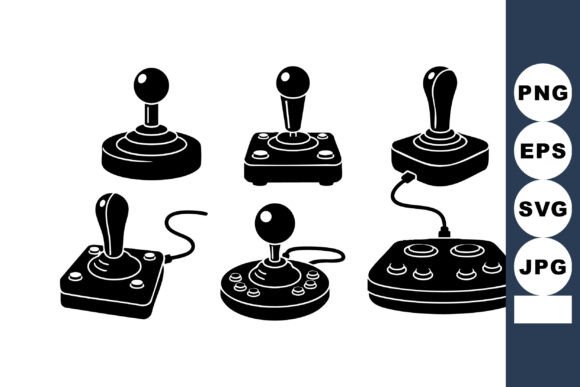
When you encounter a vector illustration of retro joystick game controllers in a black silhouette style, you are looking at more than a nostalgic design element. This asset, often delivered as a downloadable ZIP containing SVG, EPS, JPG, and PNG files, represents a deliberate tool for communication, branding, and user engagement. Understanding its strategic potential requires moving beyond surface-level appreciation of vintage gaming aesthetics. For entrepreneurs, marketers, creators, and decision-makers, the question is not whether the design looks appealing, but how it can serve specific goals related to positioning, productivity, customer experience, and long-term results. This article explores the thoughtful integration of such visual elements into your work, offering practical guidance on when and how to rely on them, along with the risks of using them without clear context.
Understanding the Asset and Its Strategic Potential
Retro joystick game controllers, rendered as a collection in a cohesive silhouette style, tap into a rich visual language tied to arcade culture from the late 20th century. The black silhouette approach simplifies the form, emphasizing the iconic shape of joysticks, buttons, and cables without distracting detail. This makes the illustration highly versatile for various media, from web design to print materials. Strategically, such an asset can serve multiple purposes: it can evoke nostalgia, signal a brand’s playful or innovative nature, or provide a visual anchor for content related to gaming, technology history, or interactive entertainment. When you download the ZIP with multiple file formats, you gain flexibility in resolution and editing, which supports different use cases without requiring additional design work. The strategic value lies in its ability to communicate efficiently, saving time while maintaining visual consistency across platforms.
Why Thoughtful Use Matters for Branding and Communication
Using retro joystick graphics without intention can dilute your message or confuse your audience. Thoughtful integration, however, reinforces your positioning. For instance, a company launching a product targeting gamers or tech enthusiasts might use the silhouette to build instant recognizability. The key is to align the visual with your core narrative. If your brand emphasizes innovation through simplicity, a clean silhouette style can enhance that message without competing for attention. For marketers, this means considering the emotional response the image triggers. Nostalgia can create positive associations, but it must fit the context. A financial services firm, for example, would likely find less resonance than an event planner organizing a retro arcade party. The decision hinges on whether the visual supports your communication goals or introduces cognitive dissonance.
Aligning with Audience Expectations
Your audience’s age range, interests, and expectations matter. Adults aged 20 to 50 often have personal memories of arcade games, making the imagery relatable. Yet, overusing such elements can come across as outdated or lazy. Strategic use involves selecting moments where the visual adds clarity or emotional depth. For educators explaining the evolution of gaming interfaces, the silhouette diagram can serve as an instructional aid. For freelancers building a portfolio in game design, it can act as a subtle nod to industry roots. The goal is to enhance, not dominate, your message.
Planning Your Approach: When and How to Use Retro Joystick Graphics
Effective use of retro joystick vector assets requires planning. Start by defining the purpose: Is it for a blog post header, a social media campaign, a product label, or a presentation slide? The format—SVG for scalability, EPS for editing, JPG for quick sharing, PNG for transparency—affects your workflow. For example, an SVG file is ideal for responsive web design because it scales without loss, while a PNG with transparency works well for overlays on dark backgrounds. Include these files in your planning to avoid last-minute format issues.
Assessing Fit with Your Content Strategy
Before integrating the graphic, review your existing visual identity. Does the silhouette style match your color palette, typography, and overall tone? If your brand uses vibrant, detailed imagery, a flat silhouette may contrast sharply unless intentionally used for emphasis. For bloggers writing about retro gaming culture, the asset can serve as a featured image that immediately signposts the topic. For publishers creating newsletters, the nostalgic design can boost open rates when used sparingly. Consider the visual weight: multiple controllers in a collection might crowd a small space, so cropping or isolating single elements can improve clarity.
Timing and Context
Timing matters when deploying nostalgic imagery. Seasonal events, product anniversaries, or cultural moments related to gaming history can amplify relevance. For instance, using the joystick graphic during a gaming convention or in conjunction with a retrospective article adds contextual depth. Avoid random insertion; instead, let the content dictate the visual need. If your goal is to educate about ergonomics in game controller design, the silhouette can illustrate key points without distracting from your narrative.
Practical Applications Across Different Contexts
The versatility of retro joystick controllers in vector format extends across multiple professional domains. Below are concrete examples aligned with common goals.
- Branding for Game-Related Businesses: An indie game studio can use the silhouette in logos or merchandise to telegraph its focus on classic gameplay. The black silhouette style keeps the logo clean for digital and print use.
- Educational Materials: Teachers covering the history of human-computer interaction can embed the image in slides or handouts. The simple lines make it suitable for diagrams that accompany explanations of analog vs. digital input.
- Marketing Campaigns for Nostalgia Products: A company selling replica arcade cabinets might feature the imagery in social media ads. Testing A/B versions with and without the graphic can reveal engagement differences.
- Website Design Elements: Use the SVG file as a background pattern or decorative element on landing pages. The scalable format prevents pixelation on high-resolution screens.
- Freelance Portfolios: Graphic designers or writers covering tech topics can include the image as a visual anchor, demonstrating their understanding of gaming aesthetics.
- Presentation Decks: Consultants pitching to gaming industry clients can use the silhouette to build rapport quickly without relying on generic stock photos.
Each use case benefits from early consideration of the file type. If you need to edit the design—for example, changing the orientation or removing a controller—the EPS or SVG formats allow modification in vector software. JPG and PNG are best for final, unchanging uses.
Risks of Using Vintage Game Imagery Without Clear Intent
Relying on retro joystick graphics without strategic grounding introduces several risks. First, trivialization: if the image does not connect logically to your content, it can undermine credibility. A serious article on artificial intelligence paired with a joystick silhouette might confuse readers about the topic’s relevance. Second, overfamiliarity: given the abundance of free retro gaming assets, using the same style as competitors can make your brand appear generic. Third, accessibility concerns: silhouettes, while aesthetically clean, may not convey information to visually impaired users if not accompanied by proper alt text. Fourth, cultural mismatch: not all audiences view vintage arcade elements fondly; younger demographics may see them as archaic rather than nostalgic. Finally, format limitations: if you choose JPG over SVG for a logo and later need to resize, you may face quality loss that forces redesign work. These risks underscore the need for deliberate choice.
Mitigating Risks Through Intentional Design
To avoid pitfalls, test the graphic with a small audience segment before wide deployment. Gather feedback on whether the image supports or detracts from the message. Use descriptive file names and alt text to improve accessibility. Pair the silhouette with modern typography or color accents to avoid appearing stuck in the past. If the context is educational, consider combining the graphic with captions that explain its significance. For branding, ensure the silhouette aligns with other visual cues in your identity system, such as icons or patterns. Intentionality transforms an arbitrary choice into a calculated component of your strategy.
Decision-Making Guidance for Long-Term Results
Long-term results from using retro joystick controllers hinge on consistency and adaptation. If you decide to adopt this graphic as part of your visual library, document when and where you use it. This creates a reference point for future projects. For example, a blog series on vintage gaming could feature the silhouette in every header, building a recognizable thread. Over time, this repetition can enhance brand recall. However, avoid monotony by varying the arrangement or combining the image with other elements. The downloadable ZIP with multiple formats supports this adaptability; you can use the SVG for large displays and the PNG for thumbnails without repeating design work.
Evaluating Impact on Customer Experience
For businesses focused on customer experience, the graphic should contribute to a seamless and engaging journey. Imagine a website that uses the joystick silhouette as a loading animation—it can reduce perceived wait time by entertaining users. Or a packaging design where the silhouette hints at the product’s interactive nature. Measure impact through metrics like time on page, click-through rates, or direct feedback. If the image consistently correlates with positive responses, it justifies continued use. If not, revisit the context or replace it with an asset that better serves your goals.
Balancing Nostalgia with Modern Expectations
Nostalgia is a powerful but delicate tool. Use it to bridge past and present, not to retreat to the past. The retro joystick controllers evoke a specific era, but your content should still address current needs. For educators, link the historical design to modern gaming controllers to show progression. For marketers, combine the silhouette with contemporary copy that speaks to today’s challenges. This balance prevents the asset from feeling dated while leveraging its emotional pull. Decision-makers should regularly review whether the visual still aligns with evolving brand positioning or audience preferences.
Practical Tips for Immediate Implementation
To start using the retro joystick vector illustration strategically, follow these steps. First, download the ZIP and organize the files by format. Keep the SVG and EPS for editing, and reserve JPG and PNG for quick deployment. Second, test the silhouette on different backgrounds, including light and dark surfaces, to ensure contrast. Third, integrate it into a content calendar where it appears at planned intervals—not randomly. Fourth, pair the image with text that clarifies its relevance, such as in infographics or slide headers. Fifth, solicit early feedback from colleagues or a focus group to catch mismatches before launch. These actions move you from passive consumption to active, purposeful use.
Long-Term Value Through Repurposing
The asset’s value compounds when you repurpose it across channels. The same silhouette that works in a blog post can be adapted for an email header, a social media image, or a conference banner. Because the vector format preserves quality, you can resize and edit without losing fidelity. This efficiency supports productivity, allowing you to maintain visual consistency without repeated design costs. For freelancers and small business owners, this reduces overhead while strengthening brand identity. For publishers, it ensures that visual storytelling remains cohesive across articles and series.
Strategic Observations for Different Roles
Different professionals will find unique advantages. Entrepreneurs can use the graphic to differentiate their offerings in a crowded market, especially if they operate in entertainment or education. Marketers can leverage the nostalgic trigger to increase ad recall and engagement. Educators can simplify complex topics about game design by anchoring lessons with a familiar visual. Creators can incorporate the silhouette into merchandise or digital products, such as stickers or templates. Bloggers can use it to break up text-heavy posts and maintain reader interest. In each case, the decision should align with specific outcomes, not general use.
Final strategic observation: the retro joystick game controllers vector illustration is a resource that rewards intention. Without a plan, it risks being decoration. With a plan, it becomes a strategic asset that supports branding, communication, and user connection. The file formats give you flexibility, but your goals give the image meaning. Focus on context, audience, and consistency, and let the nostalgic design work for your long-term objectives rather than against them. Approach it as you would any tool: understand its strengths, acknowledge its limitations, and deploy it where it adds measurable value.